Keratinase versus general protease for feathers, hair, wool, bristles and hide residues: when each fits and what to specify. For processors and resellers buying in bulk; quoted per order.
Unlock value from the world’s toughest keratin streams.
Keratinase and general protease are related, but they are not interchangeable process tools.
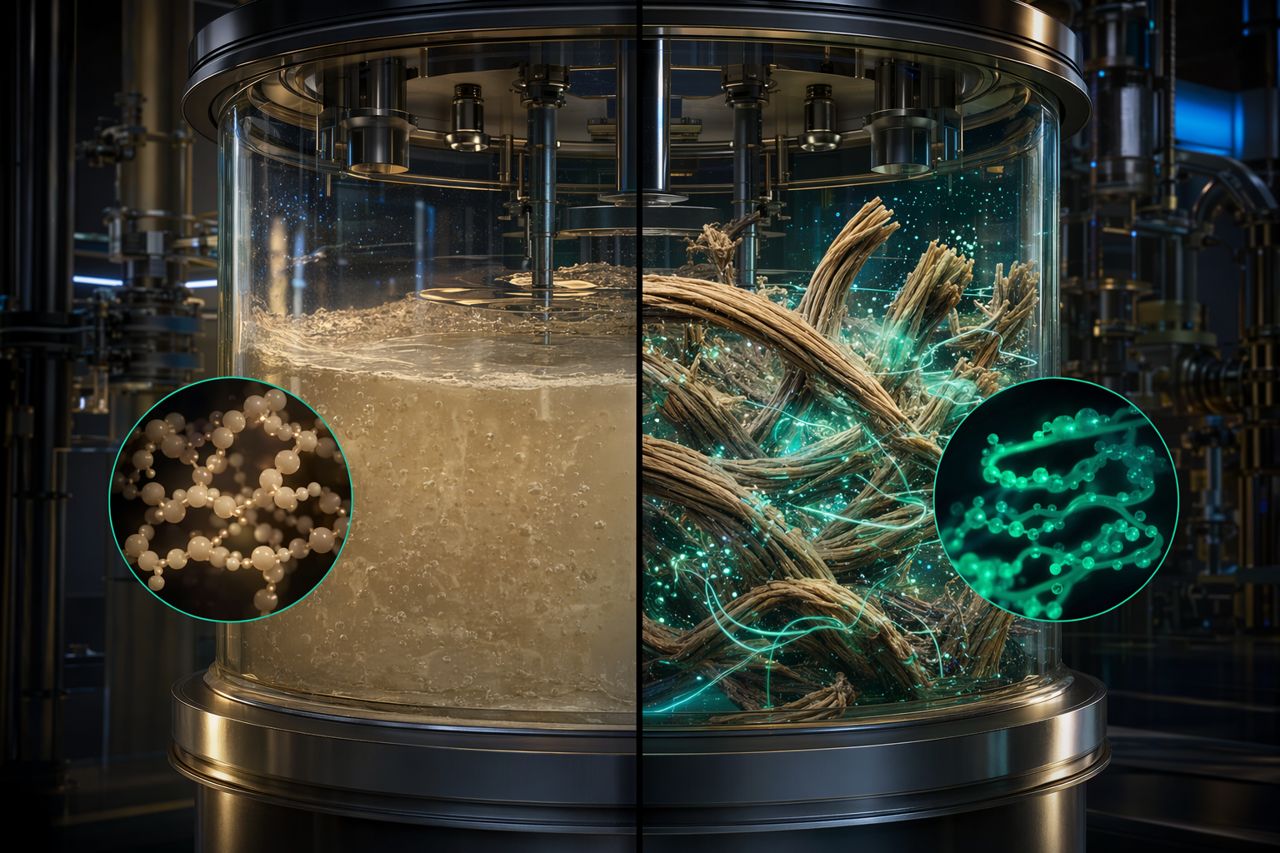
A general protease is built to cut accessible protein chains. A keratinase is selected for a harder job: converting keratin-rich materials whose protein is locked inside dense fiber architecture, disulfide crosslinks, and highly resistant structural domains.
For processors handling feathers, hair, wool, bristles, horn, hoof, or hide-derived residues, that distinction matters. It affects conversion rate, pretreatment needs, viscosity behavior, odor control, filtration, downstream peptide profile, and whether the process can be repeated economically at production scale.
Keratinase Enzyme Solutions supplies keratinase in bulk to processors, feed and fertilizer producers, tanneries and enzyme distributors choosing between a keratinase and a general protease. Pricing is quoted per order.
Comparing keratinase with a protease you already use? Send the product you need, the quantity per order or per month, and the destination country. Request a quote
Protease is the broad enzyme category. It includes many enzyme types that hydrolyze proteins into smaller peptides.
Keratinase Enzyme is a specialized protease chosen for keratinous substrates. It is designed for protein that is difficult to access, difficult to wet, and difficult to convert with ordinary protein hydrolysis.
If the substrate is soluble protein, denatured protein, meat residue, dairy protein, plant protein, or a general protein soil, a broad protease may be the right tool. If the substrate is feather, hair, wool, bristle, or another keratin-dominant material, keratinase is the more relevant starting point.
Keratin is not just another protein source. It is a structural material.
Keratin fibers are designed by nature to resist moisture, abrasion, microbial attack, and chemical breakdown. That resistance comes from several features working together:
A general protease may hydrolyze exposed peptide bonds on the surface. But if the enzyme cannot open or penetrate the keratin structure, conversion stalls. The result may be partial softening, poor yield, inconsistent solids reduction, or a hydrolysate that does not meet downstream requirements.
| Decision point | General protease | Keratinase Enzyme |
|---|---|---|
| Primary role | Hydrolyzes accessible proteins | Converts resistant keratin-rich materials |
| Best-fit substrates | Soluble, denatured, or readily accessible proteins | Feathers, hair, wool, bristles, horn, hoof, and keratin-bearing residues |
| Key challenge addressed | Peptide bond cleavage | Fiber access, structural disruption, and keratin hydrolysis |
| Process focus | Broad protein breakdown | Controlled conversion of recalcitrant keratin into usable peptide fractions |
| Typical buyer concern | Cleaning, tenderizing, protein hydrolysis, general digestion | Waste valorization, feedstock recovery, peptide production, bioprocessing of tough animal fibers |
The practical difference is not only what the enzyme cuts. It is what the enzyme can reach.
A general protease may be suitable when the process stream already presents proteins in an accessible form. Examples include:
In these cases, the buyer is usually optimizing hydrolysis profile, speed, cost-in-use, compatibility with formulation ingredients, and downstream flavor, odor, or texture.
Keratinase should be evaluated when keratin is the primary value or primary processing barrier.
Common keratinase-fit scenarios include:
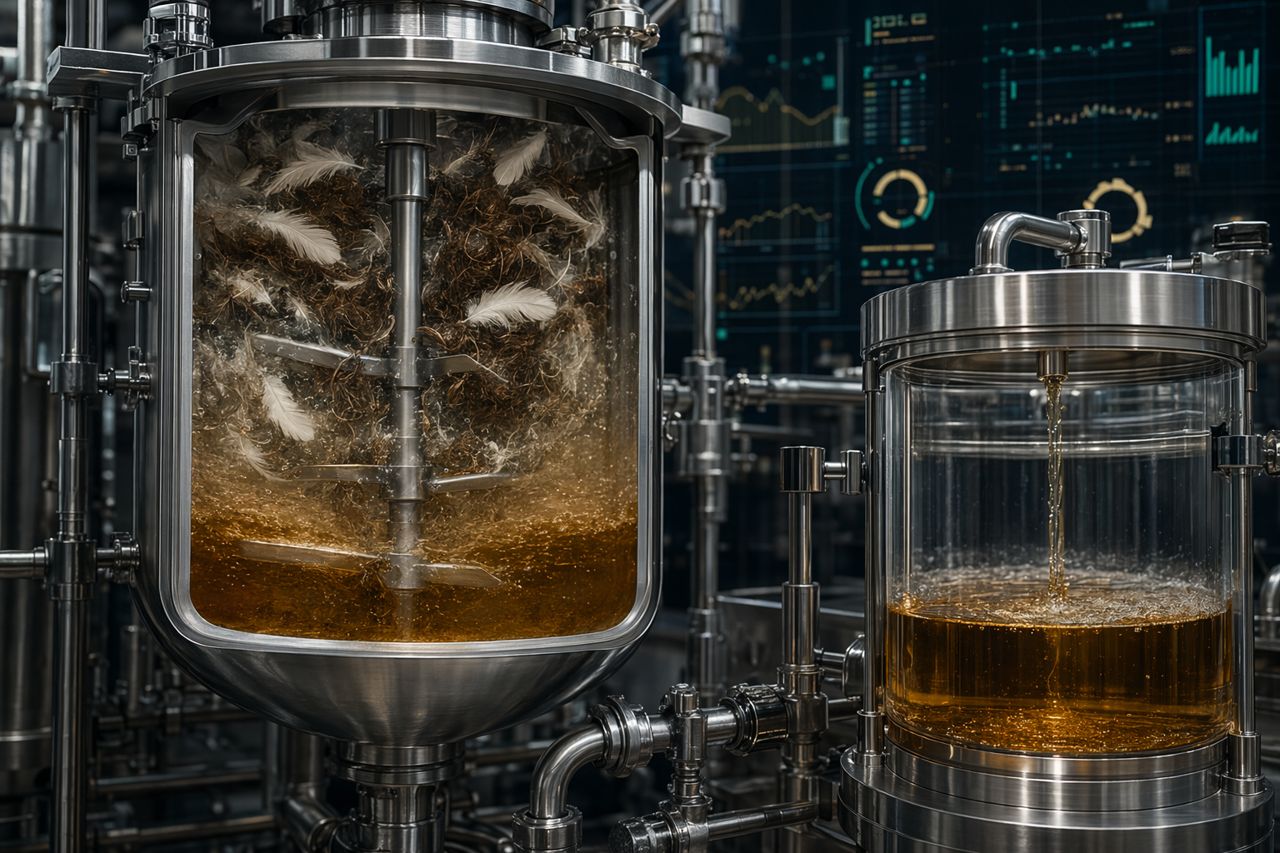
In these applications, the enzyme is only one part of the route. Substrate preparation, particle size, wetting, mixing, oxidation-reduction environment, pH strategy, thermal profile, residence time, and downstream separation all influence the commercial result.
Keratinase is a functional category, not a single standardized material. Two keratinase products can differ significantly in:
For buyers, the important question is not simply, “Is it keratinase?” The better question is: Does this keratinase fit the specific keratin stream, process constraints, and target product specification?
Before requesting pricing or sampling, define the commercial target clearly. That makes enzyme comparison faster and prevents false equivalency between broad proteases and true keratinase routes.
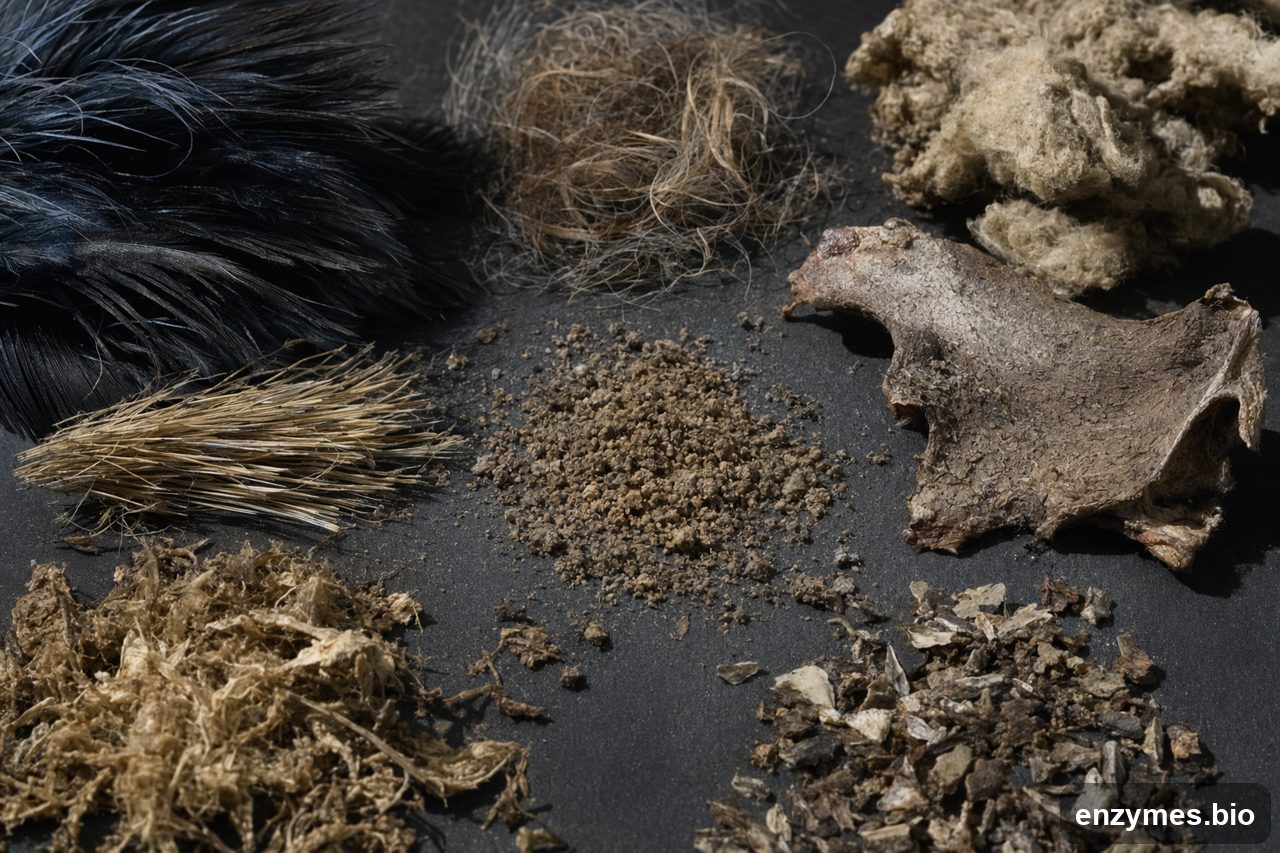
Specify whether the feedstock is feather, hair, wool, bristle, horn, hoof, hide-related material, mixed animal residue, or a blended waste stream. Keratin type and physical structure strongly affect conversion.
Clarify whether the material is raw, washed, cooked, hydrothermally treated, chemically treated, milled, dried, defatted, or blended with other proteins. Keratinase selection depends heavily on how open the structure already is.
Define whether the goal is solubilized peptides, improved digestibility, fiber softening, solids reduction, odor reduction, waste volume reduction, or a more specific ingredient profile.
Share the intended process format: batch tank, stirred reactor, slurry handling, recirculation loop, solid-state process, or integrated waste-treatment step. Mixing, solids loading, and downstream separation often determine whether a laboratory result becomes a workable plant process.
Identify whether the hydrolysate will be filtered, dried, concentrated, blended into feed, used in fermentation, incorporated into fertilizer, or treated as an intermediate for further conversion.
Use this checklist when evaluating supplier options:
If most answers point toward intact or partially opened keratin, start with Keratinase Enzyme rather than a broad protease screen.
A broad protease can look attractive on paper because the category is familiar and widely available. But keratin-rich streams often fail for route reasons, not label reasons.
The real comparison is:
A keratinase route should be evaluated as a conversion system, not as a drop-in commodity additive.
Keratinase Enzyme Solutions supports B2B teams evaluating Keratinase Enzyme for keratin-rich industrial streams. We focus on process fit, substrate flexibility, and commercially measurable downstream value.
We can help you frame the right comparison between general protease and keratinase by reviewing:
Wholesale and bulk keratinase for processors, formulators and enzyme distributors. Include:
Pricing and terms are quoted per order. Request a quote
General protease is the broad category. Keratinase is the specialist tool for tough keratin materials. If your value is locked inside feathers, hair, wool, bristles, or hide-derived residues, evaluate Keratinase Enzyme by substrate fit, process compatibility, and downstream value—not by generic protease terminology.
Tell us your application and volume — we reply with pricing and lead time.
We have received your message. We will reply by email.