Receiving, storage, dosing and spill-handling guidance for industrial keratinase, for procurement, EHS and production teams buying in bulk. Wholesale supply, quoted per order.
Unlock value from the world’s toughest keratin streams.
On this page
Keratinase Safety, Handling, and Storage
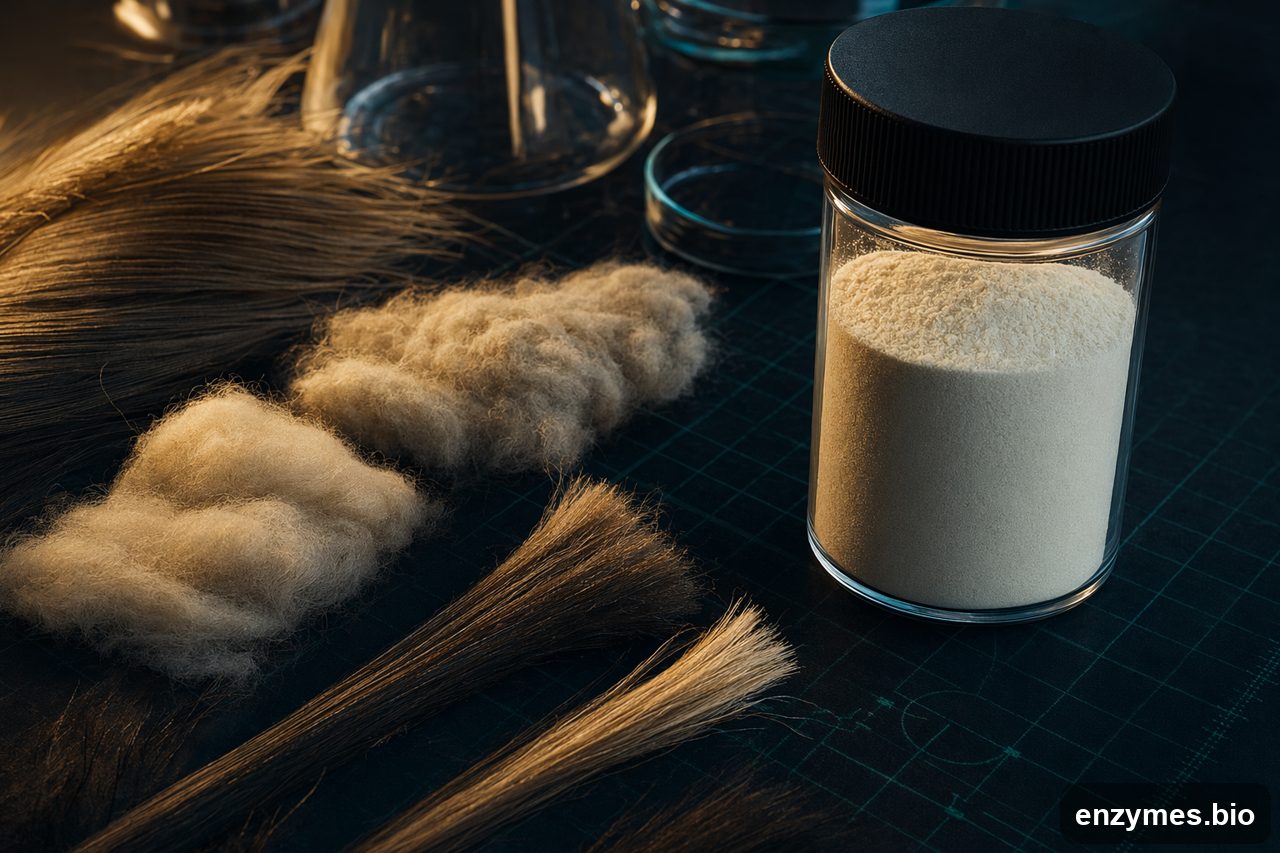
Keratinase Enzyme is used to modify keratin-rich substrates such as feathers, hair, bristles, wool, hides, and related proteinaceous materials. In industrial environments, the value of keratinase comes from controlled biological deconstruction: predictable softening, hydrolysis, solubilization, or conversion under defined process conditions.
That control starts before the enzyme reaches the reactor. Proper receiving, storage, dosing, and housekeeping help protect personnel, preserve enzyme performance, and reduce avoidable batch variation.
This page provides general handling guidance for procurement, EHS, production, and formulation teams. Always follow the product-specific safety and technical documents for your grade and local regulatory requirements; we tell you which documents are available for that grade.
Keratinase Enzyme Solutions supplies keratinase in bulk to plants, formulators and distributors who receive, store and dose the enzyme at production scale. Pricing is quoted per order.
Planning keratinase supply for your plant? Send the product you need, the quantity per order or per month, and the destination country. Request a quote
Core handling principles
Keratinase should be treated as a functional industrial biocatalyst, not as an inert commodity powder or liquid additive.
Key controls
Keep containers sealed when not in use.
Avoid creating dust, mist, or aerosols during transfer and dosing.
Use local exhaust ventilation where airborne exposure may occur.
Wear appropriate personal protective equipment for the product form and plant task.
Prevent moisture ingress for dry formats.
Prevent contamination of liquid formats through clean transfer practices.
Segregate from incompatible process chemicals unless compatibility has been confirmed.
Train operators on enzyme-specific exposure risks and spill response.
Enzymes can be protein sensitizers. Repeated inhalation exposure to airborne enzyme dust or aerosols may create respiratory sensitivity in susceptible individuals. Engineering controls and disciplined transfer practices are therefore as important as gloves and eyewear.
Recommended PPE for routine plant handling
PPE should be selected based on the supplied SDS, site risk assessment, and task exposure potential. For general industrial handling, teams commonly evaluate:
Safety glasses or chemical splash goggles
Protective gloves compatible with the formulation and surrounding chemicals
Long sleeves, lab coat, coverall, or task-appropriate protective clothing
Respiratory protection where dust, mist, spray, or aerosol formation cannot be controlled by ventilation
Closed footwear appropriate for wet or chemical-processing areas
PPE is the final layer of control. For enzyme handling, the preferred hierarchy is enclosed transfer, ventilation, low-dust procedures, and clean housekeeping before reliance on respirators.
Receiving and inspection checklist
When keratinase arrives on site, confirm that the shipment is suitable before it enters inventory or production staging.
On receipt, verify:
Container integrity: no punctures, leaks, swelling, wet cartons, or damaged closures
Label match: material name, lot number, quantity, and internal item code
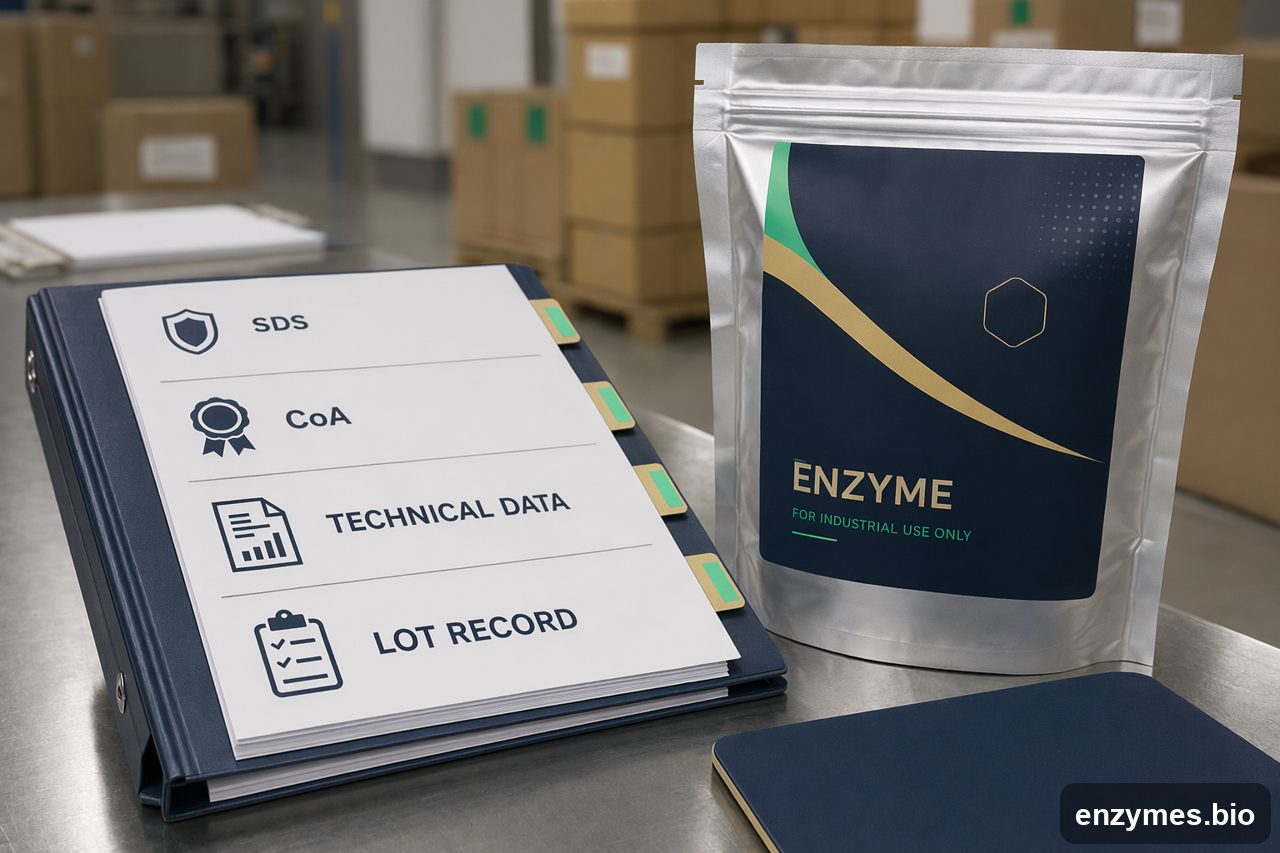
Documentation: the documents agreed for that grade
Temperature history when temperature-controlled freight is specified
Expiry or retest date
Product form: powder, granulate, liquid concentrate, or formulated blend
Quarantine status under your quality system
Do not use containers with unclear identity, compromised seals, or suspected water ingress until quality review is complete.
Storage guidance
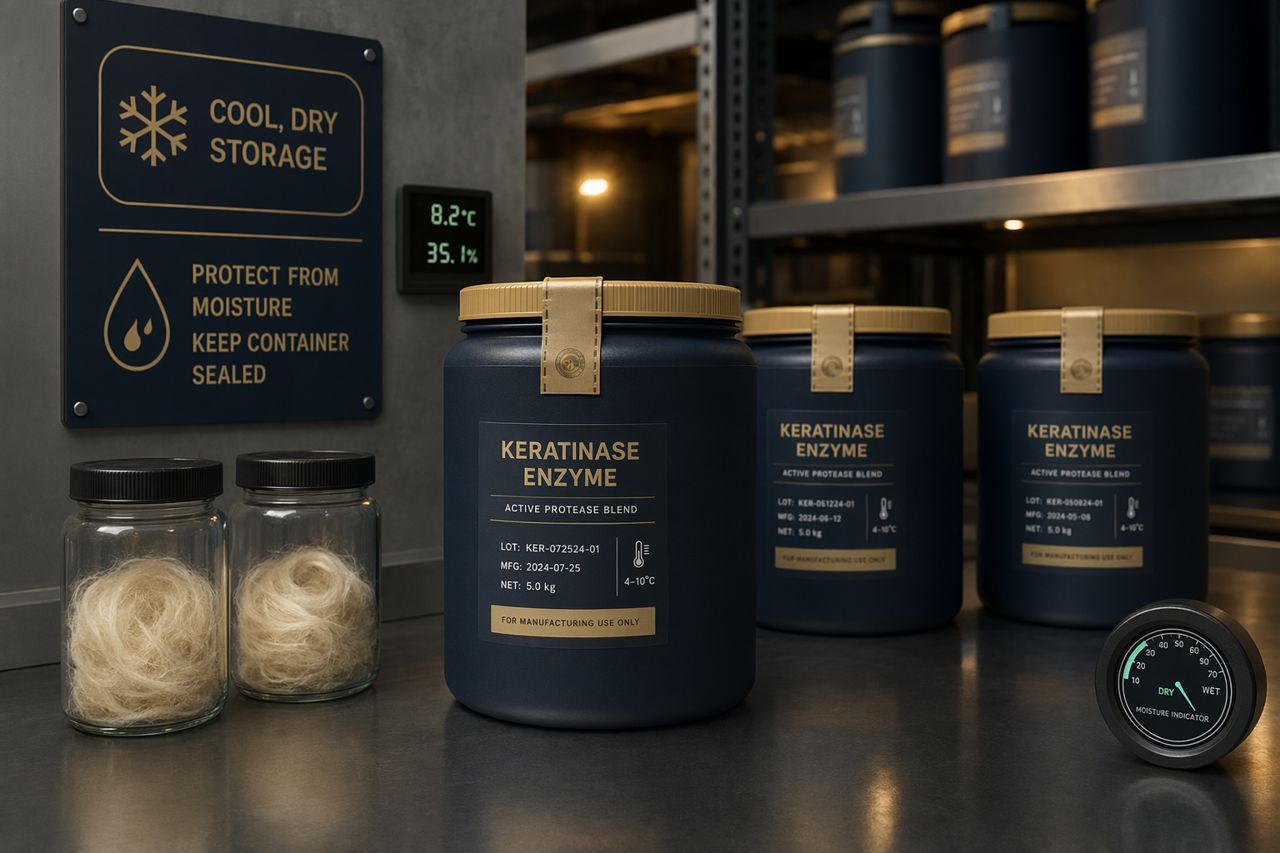
Storage conditions affect enzyme stability, handling behavior, and batch-to-batch consistency. Follow the label and product-specific documentation first. As a general principle, keratinase should be stored cool, dry, sealed, and protected from avoidable heat exposure.
For dry keratinase formats
Store in original sealed containers until use.
Keep away from humidity, washdown spray, steam lines, and condensation points.
Reseal immediately after sampling or dispensing.
Avoid storing open containers in production rooms with high moisture or airborne protein dust.
Use clean, dry tools for sampling and weighing.
Prevent caking by minimizing headspace exposure and repeated opening.
For liquid keratinase formats
Keep containers closed and clean around bungs, caps, and transfer ports.
Avoid repeated dipping or manual contact with the product.
Use sanitary or clean-transfer equipment where appropriate.
Protect from excessive heat and freeze-thaw cycles unless the product documentation permits them.
Mix gently if the technical documentation recommends homogenization before use.
Inspect for unusual odor, gas formation, phase separation, or visible contamination before charging.
Warehouse placement
Avoid placing keratinase near strong oxidizers, incompatible sanitizers, acids, alkalis, or high-heat zones unless compatibility has been reviewed. Store away from food-contact materials unless your facility procedures allow shared storage and cross-contamination controls are in place.
Transfer and dosing practices
Keratinase works best when it is introduced consistently into the process. Poor dosing practices can create localized over-concentration, under-mixing, exposure risk, and inconsistent substrate conversion.
Good practice for powder addition
Use enclosed or low-dust transfer where possible.
Add slowly to the designated make-down or process zone.
Avoid dumping from height.
Use pre-wetting or slurry preparation only when supported by product guidance.
Keep powder handling away from high-airflow fans and open floor drains.
Clean residues with methods that do not aerosolize enzyme dust.
Good practice for liquid addition
Use metered pumps, closed transfer, or controlled manual dosing.
Confirm compatibility with pump seals, tubing, and downstream chemistry.
Avoid splashing into open vessels.
Flush lines according to site procedure after dosing.
Do not return unused material from an open vessel to the original container unless your quality system permits it.
For process trials, document the substrate, pH range, temperature range, residence time, mixing intensity, and downstream endpoint. These variables are often more useful for scale-up than a single addition-rate number taken out of context.
Spill response and housekeeping
The main goal in an enzyme spill is to prevent airborne exposure and prevent uncontrolled spread through traffic, drains, or washdown water.
Dry spills
Restrict access and avoid sweeping dry powder aggressively.
Use approved vacuum equipment with suitable filtration where available.
If wet cleaning is required, dampen carefully to avoid dust generation.
Collect waste according to site procedures and SDS guidance.
Clean surrounding surfaces, footwear paths, and equipment ledges.
Liquid spills
Isolate the area and prevent slip hazards.
Contain with compatible absorbent material.
Avoid pressure spraying or high-energy washdown that can create aerosols.
Collect absorbed material for disposal according to site procedure.
Rinse surfaces only after the bulk spill has been removed.
After any significant spill, review the root cause: container damage, transfer height, fitting failure, forklift impact, poor staging, or insufficient operator training.
Compatibility considerations
Keratinase is a protein-based catalyst. Its performance and stability can be affected by surrounding chemistry and storage conditions.
Review compatibility with:
Strong oxidizing agents
Aggressive sanitizers
Extreme pH exposure outside the intended process window
High heat before dosing
Solvents or surfactant packages not previously evaluated
Preservatives used in liquid formulations
Metal ions or chelating systems when relevant to the formulation
For formulators, compatibility work should be done in the final matrix, not only in water. Viscosity, salts, preservatives, surfactants, and solids can all change how an enzyme behaves over time.
Quality control and shelf-life management
Good inventory practice reduces operational surprises.
Recommended controls
Use first-expiry, first-out inventory rotation.
Track lot numbers from receipt through production batch records.
Keep opened-container logs where required.
Define maximum open-container hold time under your quality system.
Retain samples when your process requires investigation capability.
Compare performance by process endpoint, not only by incoming paperwork.
Requalify material if storage excursions occur.
If a lot has been exposed to moisture, heat, freezing, contamination risk, or damaged packaging, hold it from use until reviewed by quality and technical personnel.
Operator training points
Training should be practical and task-specific. Operators do not need a lecture on enzyme biochemistry to handle keratinase well; they need clear rules that fit the line.
Cover these topics
What the enzyme does in the process
Why dust, mist, and aerosol control matter
How to open, sample, weigh, and reseal containers
Which PPE is mandatory for each task
How to respond to dry and liquid spills
What damaged packaging looks like
Which chemicals should not be stored or mixed without approval
Who to contact when material identity, condition, or performance is uncertain
Visual work instructions near dosing points can reduce variation and improve compliance across shifts.
Guidance for procurement and plant teams
When sourcing Keratinase Enzyme, the commercial question is not only price per kilogram. Handling profile, storage fit, documentation quality, lot consistency, and process support all affect real cost in use.
Before approving supply, confirm:
Product form suitable for your dosing equipment
Packaging size aligned with batch frequency and open-container control
Shelf-life and storage requirements compatible with your warehouse
Which documents are available for your grade and destination market
Lot traceability and change-control expectations
Technical support for substrate trials and process fit
Clear specification language that matches your internal acceptance process
The right keratinase supply should fit both the reaction and the plant.
Request a quote or handling support
Wholesale and bulk keratinase for plants, formulators and distributors. Include:
Product: your substrate, process format and preferred product form (powder or liquid, where offered)